
A Doha diner rarely finds a restaurant through a single channel. They see a Reel on Instagram, check the reviews on Google Maps, glance at the menu on Talabat or Snoonu, and only then decide whether to book a table or order in. Each of those moments is a chance to win the customer or lose them. Effective restaurant marketing in Doha means making those channels work together, so the story a guest sees on one is confirmed by the next.
This guide covers the three channels that matter most for Doha restaurants, social media, delivery apps and Google Maps, plus how to connect them, plan around Qatar’s busy seasons and measure what’s working. If you’d like a team to handle the social side, our page on restaurant social media in Qatar explains how MediaSine works with F&B brands.
How Doha Diners Decide Where to Eat?
Doha’s dining scene is crowded and diverse. Restaurants compete for Qatari families, young professionals, a large and varied expatriate population and visitors, often within the same neighbourhood, whether that’s The Pearl, Msheireb, Lusail, West Bay or a busy strip in Al Sadd. Each group discovers restaurants slightly differently, but the pattern is similar: something catches their eye, they check whether it’s worth it, then they choose how to order.
That makes F&B marketing in Qatar less about any single channel and more about consistency. A beautiful Instagram feed loses its power if the Google Maps listing shows the wrong opening hours. A strong delivery app presence suffers if the photos look nothing like the food that arrives. The aim is a joined-up presence where discovery, trust and ordering all point the same way.
It also means accepting that every channel has a different job. Social media creates desire, delivery apps capture convenience, and Google Maps provides reassurance at the moment of decision. Good restaurant marketing in Doha gives each channel enough attention to do its job well, rather than pouring everything into whichever one the owner happens to use most. It’s common to find restaurants with a strong Instagram account and a neglected Google listing, or a busy delivery menu with no social presence at all. The gaps are usually where the easiest wins are hiding.
Social Media: Where Doha Diners Discover You
Social media is usually where the journey begins. For most Doha restaurants, Instagram is the main storefront, with Snapchat and TikTok playing a growing role in discovery, especially among younger audiences. Our guide to choosing platforms in Qatar covers which ones suit which brands.
What works for restaurant social media in Qatar?
Strong restaurant social media in Qatar leads with the food in motion: sizzling grills, dessert pulls, a pour, a plate being built. Short Reels and Snapchat Stories outperform static photos for discovery, while carousels work well for menus and set offers. Behind-the-scenes content, meeting the chef or showing fresh ingredients arriving, builds trust and personality.
Language matters too. Many Doha restaurants post in English with Arabic versions, or lead with Arabic for Qatari-focused concepts. Keep captions short, name the dish and the area, and always make it obvious how to book or order.
Working with creators
Food creators can bring a wave of new guests, but choose carefully. Check that a creator’s audience is actually in Qatar, that their engagement looks genuine and that their past restaurant posts led to real interest. Agree what will be posted and make sure paid or hosted visits are disclosed. A local creator with a loyal Doha following often beats a larger regional account with a scattered audience.
Delivery Apps: Where Many Orders Actually Happen
For many Doha restaurants, delivery is a major share of the business. Platforms such as Talabat, Snoonu, Rafeeq and Keeta give you access to customers who may never visit your dining room. But on these apps you’re competing side by side with dozens of similar restaurants, often on a single scroll, so your listing has to do the selling.
Make your listing work harder
Start with photography. Delivery customers decide largely on images, so every menu item that matters should have a clear, appetising, accurate photo. Write short, specific item descriptions that mention key ingredients and portion sizes. Structure the menu so best-sellers and combos are easy to find near the top. A well-shot menu is one of the best investments a delivery-focused restaurant can make; we’ll cover it in more depth in our guide to food photography for menus and delivery apps.
Ratings, reviews and operations
On delivery apps, operations are marketing. Late orders, cold food and missing items lead to low ratings, and low ratings push you down the list. Packaging that keeps food hot and intact, accurate prep times and consistent portions protect your ranking better than any promotion. Read reviews regularly and fix the issues that come up repeatedly.
Use promotions wisely
Delivery platforms offer discounts, featured placements and loyalty programmes. These can boost visibility, but they also eat into margins, which are already reduced by platform commissions. Use promotions with a clear goal, such as launching a new item or filling a quiet weekday, rather than discounting all the time. And keep inviting delivery customers to follow you on social media, so you build a relationship you own, not just one the app owns.
Google Maps: Where Guests Check You Out
When someone searches for a restaurant near them, or looks you up after seeing a post, your Google Business Profile is often the first thing they see. For dine-in restaurants especially, Google Maps is where curiosity turns into a visit.
Get the basics right
Claim and verify your profile, choose accurate categories and keep your address, phone number and opening hours correct, including special hours for Ramadan, Eid and public holidays. Add a menu link, a booking link if you take reservations, and a delivery link if you’re on the apps. Small errors here, like old hours or a broken link, cost real customers.
Photos, posts and reviews
Upload fresh photos of dishes, the interior and the exterior regularly, so guests know what to expect and can find your entrance. Use Google posts to share offers, events and new menu items. Most importantly, respond to reviews, both positive and negative, politely and promptly. A thoughtful reply to a complaint often reassures future guests more than a dozen five-star reviews. Gently encourage happy guests to leave reviews, for example with a card on the table or a message after their visit.
Connecting the Three Channels of Restaurant Marketing in Doha
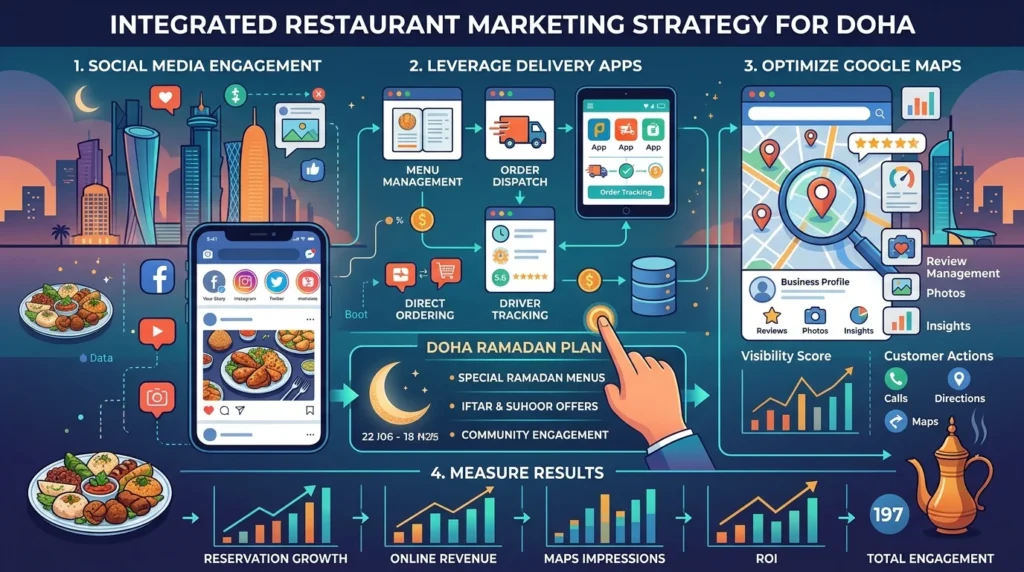
The strongest restaurant marketing in Doha treats social media, delivery apps and Google Maps as one system. Here’s what that looks like in practice:
- Your Instagram bio links to booking and delivery options, and your Google profile links back to Instagram.
- The same hero dish photos appear across your social posts, delivery menu and Google listing.
- New menu items launch on all three channels in the same week.
- Special hours and seasonal offers are updated everywhere at once.
- Reviews from Google and delivery apps feed ideas for social content and menu changes.
Consistency builds trust. A guest who sees the same dish, the same tone and the same accurate details everywhere feels confident ordering or booking.
Planning Around Qatar’s Dining Calendar
Doha’s restaurant year has clear peaks. Ramadan transforms dining patterns, with iftar and suhoor becoming the key moments and late-night activity rising. Eid brings family gatherings and celebrations. Qatar National Day on 18 December, the cooler winter months, and major events and holidays all shift demand. Plan menus, social content, delivery promotions and Google posts for these periods several weeks ahead, because guests start planning early, especially for Ramadan.
If you plan to run discounts, giveaways or prize promotions on social media during these peaks, remember that promotional campaigns in Qatar can require approval from the Ministry of Commerce and Industry. Our guide to promotion permits in Qatar explains the basics.
Measuring What’s Working
Each channel gives you useful numbers, and together they show whether your marketing is filling tables and generating orders. On social media, track saves, shares, profile actions and messages. On delivery apps, watch orders, ratings, repeat customers and which items sell. On Google, look at profile views, calls, direction requests and website clicks. Above all, ask guests how they found you, and compare busy and quiet weeks against what you posted and promoted.
Keep the tracking simple. A one-page monthly summary with a handful of numbers from each channel is far more useful than a detailed dashboard nobody opens. What matters is spotting trends early, such as falling delivery ratings or rising Google calls, and acting on them.
Review these monthly and make one or two changes at a time. Over a few months, you’ll see which channel brings new guests, which drives repeat orders and where to put more effort.
Experience From Our Work With Gourmet Qatar
Food is the sector behind MediaSine’s Qatar portfolio, including our work with Gourmet Qatar. That work informs how we approach restaurant marketing in Doha: leading with the food, keeping channels consistent and planning around the moments that matter to Qatari diners.
[CLIENT INPUT REQUIRED: approved Gourmet Qatar details, e.g. the brief, which channels MediaSine handled, content approach and any client-approved outcomes. Write 2–3 sentences. Do not add results without client approval.]
Frequently Asked Questions
It depends on your business. Dine-in restaurants usually benefit most from Instagram and Google Maps, while delivery-led kitchens depend heavily on delivery app listings and ratings. Most restaurants need all three working together.
Not necessarily. Being on more apps can increase reach, but each listing needs maintenance, photos and operational capacity. Start where your customers order most and expand when you can handle the volume.
A few strong feed posts or Reels each week, plus regular Stories on service days, is a realistic rhythm for most restaurants. Consistency matters more than volume.
Yes. Ramadan changes when and how people eat, so menus, opening hours, offers and content should all adapt. Start planning several weeks before Ramadan begins.
Bring It All Together
Successful restaurant marketing in Doha comes from three channels working as one: social media to spark interest, delivery apps to convert orders and Google Maps to build trust and drive visits. Get the basics right on each, keep everything consistent, plan around Qatar’s dining calendar and measure what works. Do that, and every post, listing and review pushes in the same direction: towards a full dining room and a busy kitchen.
Grow your restaurant in Doha.
mediaSine helps Qatar F&B brands with social media, content and photography, so every channel shows your food at its best.
