
For many brands in Lebanon and Qatar, Saudi Arabia is the obvious next step. It’s the largest consumer market in the Gulf, it’s young and digitally active, and it’s changing fast. But success at home doesn’t automatically translate. The audience is bigger and more diverse, the competition is fiercer, the regulations are different and the voice that works in Beirut or Doha may sound out of place in Riyadh. Marketing in Saudi Arabia rewards brands that prepare properly and treat the Kingdom as its own market, not an extension of the one they already know.
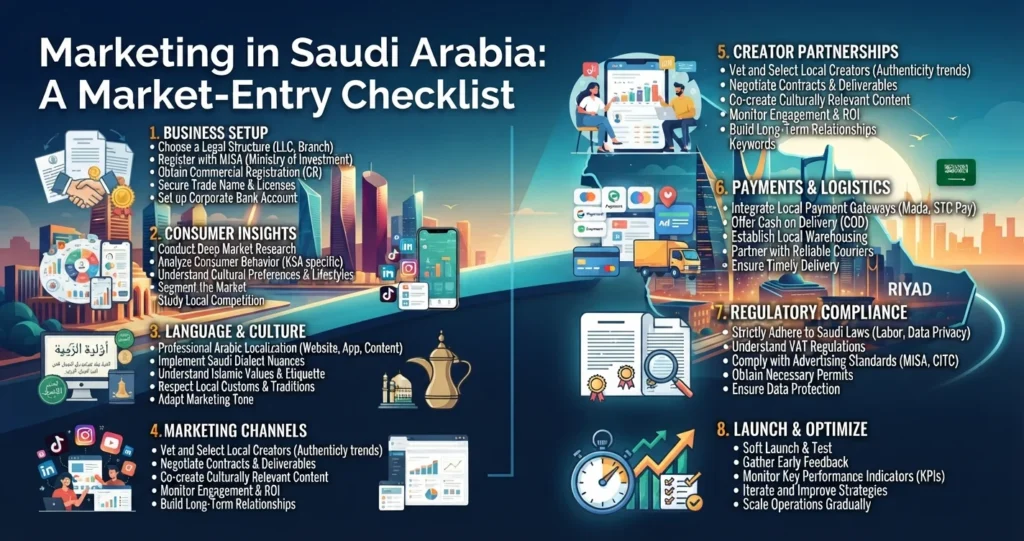
This checklist walks through the eight areas to get right before and during a Saudi launch, from business foundations and consumer understanding to language, channels, creators, payments, timing and budget. If you’d like support, see how MediaSine approaches digital marketing in Saudi Arabia.
Why Marketing in Saudi Arabia Is Different?
Scale is the first difference. DataReportal’s Digital 2026 report puts Saudi Arabia’s population at around 34.7 million, with a median age under 30 and internet use close to universal. Social platforms reach enormous audiences: Snapchat’s reported ad reach alone covers the large majority of Saudi adults. For a brand used to Lebanon’s or Qatar’s market size, that’s a step change in opportunity, and in the budget needed to be noticed.
The market is also moving quickly. Economic diversification, a growing entertainment and tourism sector, and major events have changed how Saudis spend their time and money. Consumer expectations around service, delivery and digital experience are high. Brands entering now are competing with strong local players and well-funded international ones, so a clear plan matters more than ever.
Step 1: Set Up the Business Foundations
Marketing comes after the basics. Before you spend on campaigns, make sure the business can legally operate, sell and deliver in the Kingdom.
Legal presence and licensing
Foreign companies generally need the right licensing and registration to operate in Saudi Arabia, and the route depends on your structure and activity. Many brands work with legal advisers or partners to set this up. Your setup affects practical marketing questions too: whether you can open local ad accounts, list a Saudi address on Google, issue invoices in SAR and work directly with licensed creators.
Tax and product approvals
Saudi Arabia applies VAT at 15 percent, so pricing and invoicing need to account for it. Depending on your products, you may also need approvals or conformity certificates from bodies such as the Saudi Food and Drug Authority for food and cosmetics, or through the SABER platform for many consumer goods. Check requirements for your category early, because approvals can take time and affect launch dates. This is general guidance; confirm specifics with qualified advisers.
Step 2: Understand the Saudi Consumer
Good Saudi consumer behaviour research starts with resisting generalisations. The Kingdom is large and varied, and assumptions brought from neighbouring markets can mislead.
Regions matter
Riyadh, Jeddah and the Western Region, and the Eastern Province around Dammam and Khobar each have their own character, pace and preferences. Many brands launch in one or two cities before going national, using location targeting to focus budget where they can deliver and serve customers well.
Family, community and trust
Purchase decisions are often influenced by family and close social circles, and recommendations from friends and trusted creators carry real weight. Reviews, visible customer service and a credible local presence build trust, especially for brands new to the market.
Expectations of quality and service
Saudi consumers are discerning. Fast delivery, easy returns, responsive customer service in Arabic and polished digital experiences are increasingly expected rather than appreciated as extras. Plan operations to match the promises your marketing makes, because one disappointing delivery shared in a family WhatsApp group can undo weeks of good advertising.
Step 3: Localise Language and Brand
Language is where many regional brands slip. Arabic content written for Lebanese or Qatari audiences doesn’t automatically resonate in Saudi Arabia. For social media, scripts and captions in a natural Saudi voice usually perform better than Levantine phrasing, Gulf phrasing from another country or formal Modern Standard Arabic. Use native Saudi writers, and test key messages with local audiences.
Look at your brand identity too. An Arabic version of your brand name, visuals that feel relevant to Saudi culture and messaging that reflects local values all help a regional brand feel at home rather than imported. For larger launches, it can be worth reviewing your brand identity specifically for the Saudi market before spending heavily on media.
Step 4: Choose the Right Channels
The channel mix for entering the Saudi market often looks different from home. Snapchat and TikTok are frequently lead channels, with Instagram, X and YouTube playing important roles depending on your audience. Search matters for high-intent categories, and Google Maps visibility matters for physical locations. Our guide to Snapchat ads in Saudi Arabia explains why that platform carries so much weight, and you can see how MediaSine manages social media in KSA.
Don’t overlook search. When Saudi consumers are ready to buy, many turn to Google, often searching in Arabic with spelling variations and dialect terms. An Arabic-optimised website and an accurate Google Business Profile with a Saudi address help you capture that demand.
Start with the two or three channels closest to your customers and your goal, build a strong presence there, and expand once you know what works.
Step 5: Plan Creator Marketing Compliantly
Creators are central to marketing in the Kingdom, and creator advertising is regulated. Individuals who earn from promotional content on social media need a government license, and brands should only work with properly licensed creators, with clear disclosure on every sponsored post. Rules for non-Saudi creators differ, which matters if you plan to reuse creators from Lebanon or Qatar. Our guide to Mawthooq licensing covers what brands need to check.
Step 6: Get E-commerce and Payments Right
If you sell online, local payment options can make or break conversion. Saudi shoppers commonly use mada, the national debit card network, along with Apple Pay, credit cards and buy-now-pay-later services. Cash on delivery remains relevant in some categories. Make sure your checkout supports the methods your customers prefer, displays prices in SAR including VAT, and offers delivery times that match local expectations. Saudi-built e-commerce platforms such as Salla and Zid are popular alternatives to international platforms for brands setting up a local store.
Step 7: Plan Around the Saudi Calendar
The Saudi weekend falls on Friday and Saturday, which affects posting schedules, campaign launches and customer service hours. The marketing year is shaped by Ramadan and Eid, Founding Day on 22 February, Saudi National Day on 23 September, White Friday sales and Riyadh Season. Plan major campaigns weeks ahead, because competition for attention and creators intensifies around these moments.
Step 8: Budget and Measure
Budget in SAR, separate agency fees, paid media and creator costs, and plan for a ramp-up period rather than expecting immediate returns. A focused launch in one or two cities with a meaningful budget usually outperforms a thin national spread. For a breakdown of what agency support typically involves, see our guide to social media marketing costs in Saudi Arabia.
Measure from day one. Set up analytics, platform pixels and conversion tracking before launch, define a few key metrics tied to your goal, and review them weekly during the launch phase, then monthly once performance stabilises.
Common launch mistakes
Regional brands entering the Kingdom tend to repeat the same few errors. They launch nationwide with a budget that would only be meaningful in one city. They translate home-market campaigns instead of creating Saudi ones. They underestimate how long product approvals and business setup take, then rush the marketing to hit an arbitrary date. And they treat customer service as an afterthought, so the demand their campaigns create turns into complaints instead of repeat customers. Avoiding these mistakes is often the difference between brands that build lasting success in marketing in Saudi Arabia and those that quietly pull back after a year.
Your Saudi Market-Entry Checklist
Before you launch, make sure you can answer yes to these five questions:
- Is the business set up to operate, invoice and deliver legally in Saudi Arabia?
- Do you have native Saudi Arabic content and a localised brand presence?
- Have you chosen two or three priority channels based on your Saudi audience?
- Are creators licensed and payments and checkout ready for Saudi shoppers?
- Is tracking in place, with a realistic SAR budget and a seasonal plan?
Experience From Our Saudi Work
MediaSine works with brands across Lebanon, Qatar and Saudi Arabia, which means we see the differences between these markets up close. Our Saudi experience includes our work with Pilot KSA.
[CLIENT INPUT REQUIRED: approved Pilot KSA details, e.g. the brief, services delivered, channels and creative approach, and any client-approved outcomes. Also confirm MediaSine’s Saudi office or team details for this section. Do not add results without approval.]
Frequently Asked Questions
It depends on what you’re doing. Running ads to Saudi audiences is possible from outside the Kingdom, but selling, invoicing, working directly with licensed creators and building local trust are all easier with a proper local setup. Take legal advice on the right structure for your business.
Some visuals can be adapted, but copy usually needs rewriting in a natural Saudi voice, and campaigns should reflect Saudi culture, seasons and platforms. Reused content often underperforms.
Choose based on where your customers are, where you can deliver and serve them well, and where competition is manageable. Many brands start in Riyadh or Jeddah, then expand once the model is proven.
Paid campaigns can generate early traction within weeks, but building brand awareness and trust in a new market usually takes several months. Plan for a launch phase and a growth phase, each with its own goals.
Prepare, Localise, Then Scale
Successful marketing in Saudi Arabia starts long before the first ad runs. Set up the business properly, understand Saudi consumers on their own terms, localise your language and brand, choose channels carefully, work only with licensed creators, get payments right, plan around the Saudi calendar and measure from day one. Do that, and your brand can grow in the Kingdom with the confidence of a local rather than the caution of a newcomer.
Plan your Saudi launch.
mediaSine helps Lebanese, Qatari and regional brands plan and execute their marketing in Saudi Arabia, from localisation and channel strategy to campaigns and reporting.
