
On-Page SEO Services
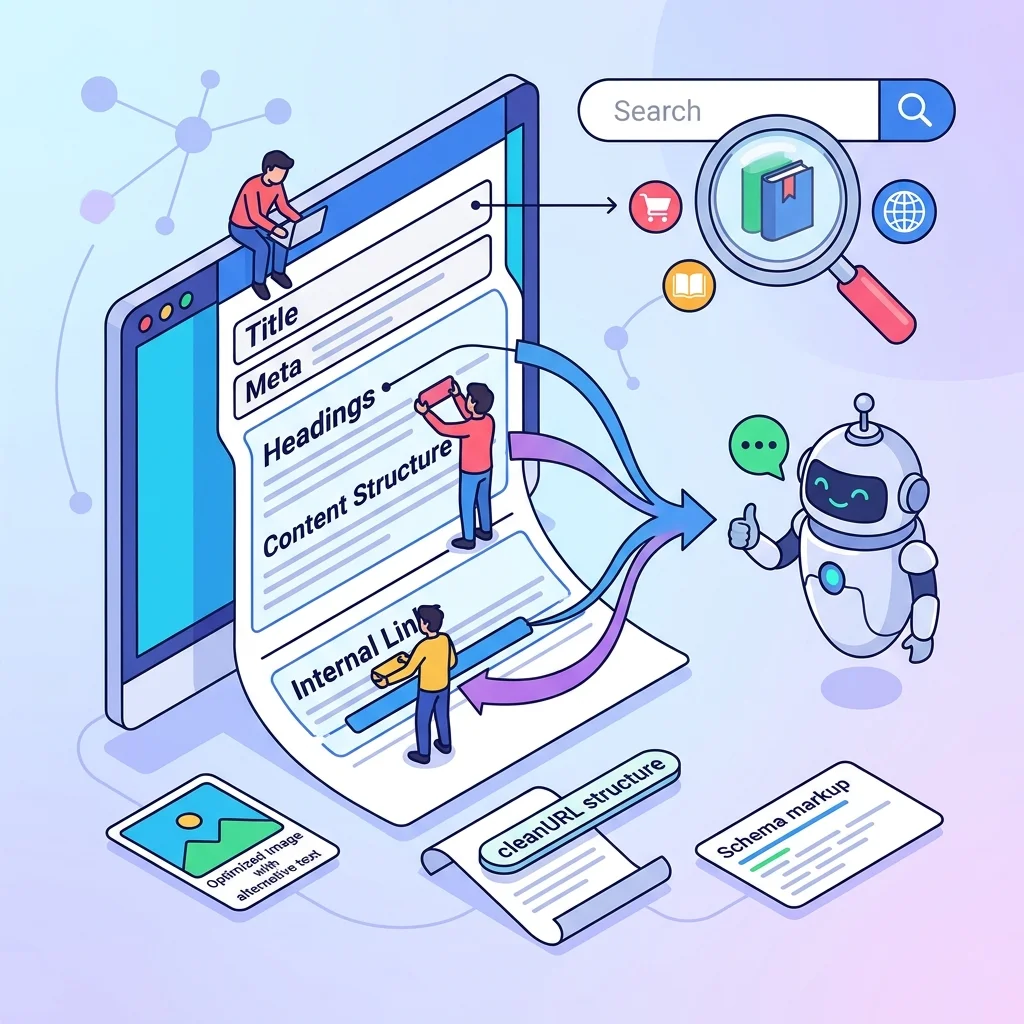
On-Page SEO Services to Improve Your Website’s Search Visibility
mediaSine provides on-page SEO services designed to improve website content, page structure, internal linking, and relevant on-page elements. We help businesses create more useful, search-focused pages that support organic visibility and make it easier for visitors to find the information they need.
Whether you manage a corporate website, an e-commerce store, or a service-based business, our approach focuses on aligning your website pages with your target keywords, audience needs, and business objectives.
What Is On-Page SEO?
On-page SEO is the process of optimizing individual website pages to help search engines understand their content and help users find relevant information.
It includes optimizing page titles, meta descriptions, headings, written content, internal links, image attributes, and other elements that influence how a page communicates its subject and satisfies search intent.
Effective on-page SEO connects keyword research with practical website improvements. Rather than simply adding keywords to a page, we focus on creating clear, relevant content with a logical structure and useful connections to other pages on your website.
Our On-Page SEO Services
1. Keyword-to-Page Mapping
We identify relevant keyword targets and map them to the most appropriate pages on your website. This helps establish clear search topics for individual URLs and reduces unnecessary overlap between pages targeting similar queries.
Our process considers search intent, business relevance, existing content, and opportunities to improve your website’s keyword coverage.
2. SEO Title and Meta Description Optimization
Page titles and meta descriptions help communicate the subject of each page in search results. We review and optimize these elements to improve relevance, clarity, and alignment with target search queries.
Our work includes:
Writing descriptive, page-specific SEO titles.
Creating relevant meta descriptions that communicate page value.
Reducing repetitive or duplicated metadata.
Aligning metadata with the actual content of each page.
Prioritizing important keywords naturally.
Meta descriptions are not a direct Google ranking factor, but well-written descriptions can help users understand a result and may influence click-through rates.
3. Heading Structure Optimization
A logical heading structure makes website content easier to scan and understand. We review page headings and organize them around the main topic and supporting subtopics.
This can include improving H1 headings, refining H2 and H3 sections, removing unnecessary repetition, and making sure headings accurately describe the content that follows.
4. Website Content Optimization
Your content should answer the questions your audience is asking while clearly communicating your products, services, or expertise.
mediaSine reviews existing website copy and identifies opportunities to improve relevance, clarity, topical coverage, and usefulness. Depending on the page, this may involve refining existing text, expanding important sections, reorganizing information, or recommending new content.
We prioritize natural language and user needs rather than keyword stuffing or arbitrary word counts.
5. Search Intent Optimization
Different searches require different types of content. Someone researching a topic may need an educational guide, while someone comparing providers may expect a service page with clear offerings and next steps.
We assess whether each page matches the likely intent behind its target queries. Where necessary, we recommend changes to page content, structure, calls to action, or information hierarchy to better satisfy that intent.
6. Internal Linking Strategy
Internal links help visitors navigate your website and help search engines discover relationships between pages.
We identify opportunities to connect related service pages, supporting articles, category pages, and other important URLs through descriptive, relevant anchor text.
Our internal linking work can help strengthen website structure, improve content discoverability, and direct visitors toward relevant information or conversion pages.
7. Image and Media Optimization
Images should support the content without creating unnecessary usability or performance issues.
Our on-page review can include descriptive image filenames, appropriate alternative text, relevant placement, and recommendations for image sizing and compression. Alternative text is written to describe meaningful image content, not to insert keywords indiscriminately.
Technical image-delivery and loading issues may require additional work under technical SEO.
8. URL and Page Structure Review
Clear, consistent URLs and a logical page hierarchy help users understand where they are within a website.
We review page naming, URL consistency, content organization, and potential overlap between pages. When URL changes are justified, we consider the appropriate redirect and migration requirements to avoid creating unnecessary broken links or losing existing URL signals.
9. Content Gaps and Page-Level Improvements
Existing pages may fail to address important questions, explain a service clearly, or distinguish one offering from another.
We identify content gaps, weak sections, repetitive copy, missing supporting information, and opportunities to improve page usefulness. Recommendations are prioritized according to search relevance, business value, and implementation effort.
10. On-Page SEO for E-Commerce Websites
Product and category pages require particular attention to relevance, duplication, and site structure.
Our e-commerce on-page SEO work can include:
Optimizing category and product page titles.
Improving product descriptions and category copy.
Refining headings and metadata.
Strengthening internal links between products and categories.
Reviewing repeated or manufacturer-supplied content.
Improving image alternative text where appropriate.
Identifying overlapping category and product keyword targets.
For larger stores, we can prioritize high-value categories and product groups before expanding optimization across the wider catalog.
Our On-Page SEO Process
Step 1: Website and Page Audit
We review your existing pages to identify content weaknesses, metadata issues, heading problems, internal linking gaps, and other page-level optimization opportunities.
Step 2: Keyword and Search Intent Analysis
We identify relevant keyword targets and evaluate the intent behind them. Each priority keyword group is mapped to the page best suited to address it.
Step 3: Optimization Roadmap
We organize recommended improvements according to business relevance, organic search opportunities, current page quality, and implementation requirements.
Step 4: On-Page Implementation
Depending on the agreed scope and available website access, we optimize titles, descriptions, headings, content, internal links, and other relevant page elements.
Step 5: Quality Assurance
We check the implemented changes for content accuracy, page consistency, keyword alignment, internal link functionality, and unintended duplication.
Step 6: Performance Monitoring
We use available data from Google Search Console, Google Analytics, and other relevant SEO tools to monitor changes in impressions, clicks, organic landing-page traffic, and other agreed KPIs.
SEO results depend on multiple factors, including competition, website condition, content quality, and search engine changes. Monitoring helps us identify further opportunities rather than promise a predetermined ranking outcome.
Who Can Benefit From Our On-Page SEO Services?
Corporate Websites
Improve service page relevance, clarify company offerings, and create stronger connections between commercial pages and supporting content.
Service-Based Businesses
Optimize individual service pages to align with relevant searches, communicate value clearly, and guide visitors toward enquiries.
E-Commerce Stores
Improve product and category page content, strengthen internal navigation, and establish clearer keyword targeting across large catalogs.
Professional and B2B Companies
Organize complex service information, address industry-specific search intent, and improve the visibility of important commercial pages.
Businesses Targeting Multiple Markets
Create more relevant page content for different audiences and markets while maintaining clear keyword targeting and avoiding unnecessary duplication between localized pages.
On-Page SEO vs. Other SEO Services
On-page SEO is one part of a broader search optimization strategy. Different SEO disciplines address different challenges.
On-page SEO: Improves individual page content, metadata, headings, and internal links.
Technical SEO: Addresses crawlability, indexability, site architecture, performance, and technical implementation.
Off-page SEO: Focuses on external authority signals, relevant backlinks, digital PR, and brand mentions.
Local SEO: Improves visibility for location-related searches and relevant local business queries.
E-commerce SEO: Applies SEO practices to product catalogs, category pages, and online shopping journeys.
For the best results, these disciplines should work together according to your website’s needs and priorities.
Why Choose mediaSine for On-Page SEO?
Strategy Based on Your Website
We assess your existing website, target audience, and business goals before recommending page-level improvements.
Relevant, User-Focused Content
We prioritize useful information, clear structure, and natural keyword integration rather than repetitive or artificially expanded copy.
Organized Keyword Targeting
We map keywords to relevant pages to help clarify each page’s purpose and reduce unnecessary competition between your own URLs.
Practical Recommendations
We focus on actionable improvements that can be implemented, reviewed, and measured within the agreed project scope.
A Connected SEO Approach
On-page recommendations can be coordinated with technical SEO, off-page SEO, local SEO, and e-commerce SEO to support a more complete organic search strategy.
