
Content Marketing Services
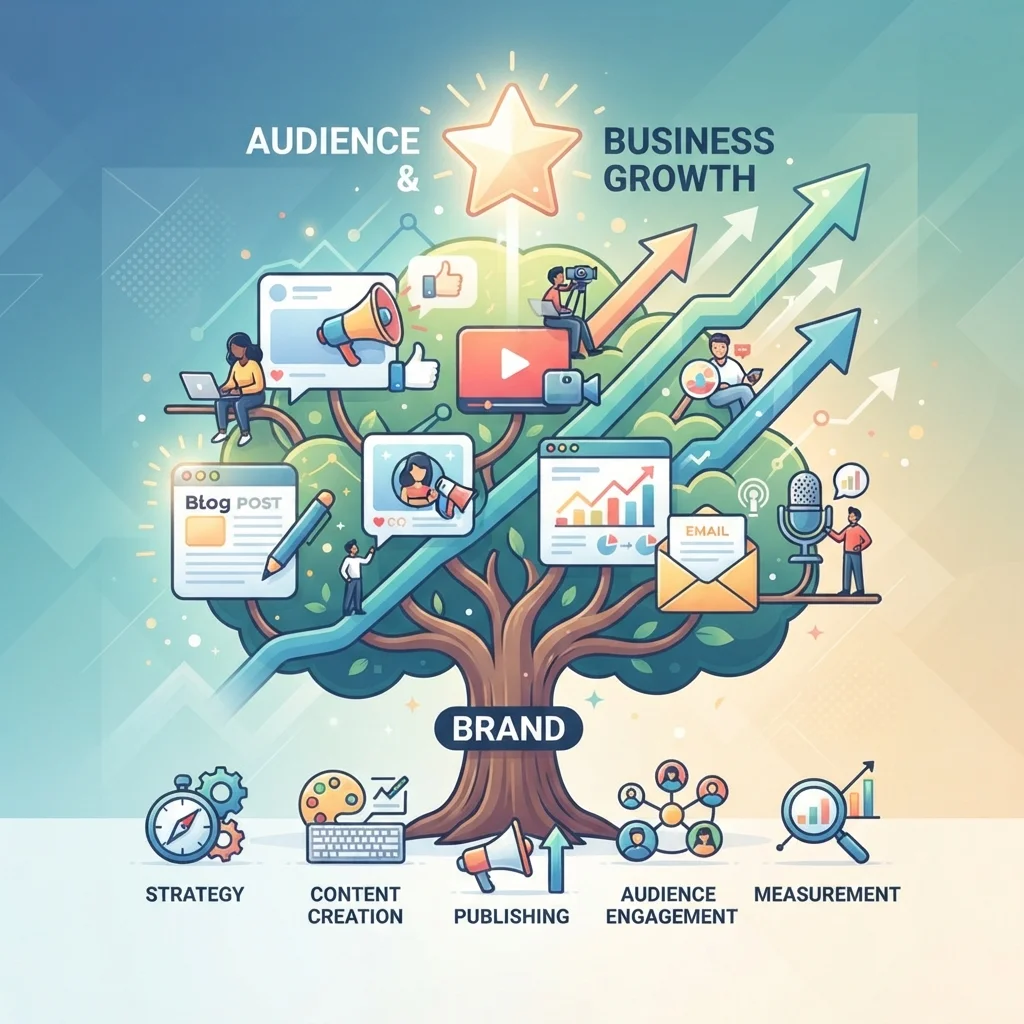
Content Marketing Services to Grow Your Brand
mediaSine provides content marketing services designed to help businesses communicate their value, build meaningful audience relationships, strengthen their digital presence, and support long-term growth.
We bring strategy, content planning, creative development, distribution, and performance analysis together to create a more coordinated approach to digital communication.
Whether your goal is to increase brand awareness, support lead generation, educate potential customers, or strengthen your position in your industry, we help you develop content initiatives aligned with your business objectives.
What Is Content Marketing?
Content marketing is a strategic approach to creating, organizing, publishing, and distributing relevant content to attract and engage a defined audience.
Rather than focusing exclusively on direct promotion, content marketing provides information, ideas, stories, and resources that help audiences understand a brand, explore a topic, evaluate solutions, and make informed decisions.
Depending on your business and audience, content marketing may include website content, educational articles, social media content, branded storytelling, campaign assets, and other relevant digital formats.
An effective content marketing strategy establishes what to communicate, who to reach, which channels to use, and how to evaluate the contribution of content to your business goals.
Our Content Marketing Services
Content Marketing Strategy
A successful content program begins with a clear understanding of your brand, audience, market, and commercial priorities.
MediaSine develops content marketing strategies that establish a practical direction for your communication and publishing activities.
Our strategic planning may include:
Reviewing your brand positioning and business objectives.
Identifying target audiences and their information needs.
Defining content themes and strategic priorities.
Mapping content opportunities across the customer journey.
Selecting appropriate content formats and channels.
Establishing editorial priorities and publishing objectives.
Defining relevant performance indicators.
Identifying opportunities to improve existing content.
The strategy provides a framework for making content decisions consistently rather than publishing disconnected assets without a clear purpose.
Editorial Calendars and Content Scheduling
An editorial calendar helps turn a content strategy into an organized publishing plan.
MediaSine can develop content calendars that define what to publish, when to publish it, which audience each piece serves, and how each asset supports your broader marketing activities.
Depending on the project, calendars may include:
Monthly or quarterly content plans.
Editorial themes and campaign topics.
Content formats and distribution channels.
Publishing dates and deadlines.
Content objectives and calls to action.
Creative and production requirements.
Content owners and approval stages.
Planned performance indicators.
A structured calendar helps coordinate content production, maintain consistency, and connect individual publications to broader campaigns.
Content Creation and Creative Coordination
Content marketing requires suitable assets that communicate your message clearly and fit the expectations of each channel.
We help businesses plan and develop content aligned with their brand identity, audience, and marketing objectives.
Depending on the agreed scope, this may include website copy, articles, campaign messaging, social media content, branded storytelling, and supporting creative assets.
We also help coordinate content formats and messaging so that related materials reinforce the same strategic direction without simply repeating identical content across every channel.
Explore our broader Content Creation services to learn more about our content production capabilities.
Website and Educational Content Strategy
Useful website content can help businesses explain their services, answer customer questions, and support visitors as they evaluate potential solutions.
We identify opportunities for educational and informational content that complements your website’s existing pages and wider marketing objectives.
This may include blog articles, industry explainers, practical guides, frequently asked questions, resource pages, and supporting content for key services.
Where organic search is a priority, content planning can be coordinated with keyword research, search intent, and topical relevance.
For dedicated search optimization, explore our SEO services.
Audience Research and Content Planning
Content is more effective when it addresses the questions, interests, challenges, and motivations of the people you want to reach.
We help identify relevant audience needs and translate them into practical content opportunities.
This process may include reviewing customer questions, researching industry topics, assessing competitor content, analyzing available website data, and identifying information gaps across the customer journey.
Based on these findings, we organize content ideas into themes and priorities that support your brand’s communication objectives.
Brand Storytelling and Content Themes
A recognizable brand needs a consistent way to communicate its perspective, values, expertise, and offering.
We help develop content themes and storytelling directions that connect your brand message with topics that matter to your audience.
This may include defining recurring editorial themes, identifying relevant brand narratives, coordinating campaign messaging, and developing content concepts that reflect your brand positioning.
For work focused specifically on branded storytelling and brand-led content, explore our Branded Content service.
B2B Content Marketing
Business-to-business audiences often require more detailed information before selecting a provider or evaluating a solution.
B2B content marketing can help businesses communicate expertise, explain complex offerings, and support longer decision-making processes.
Our approach may include:
Industry-focused educational content.
Service and solution explainers.
Thought leadership topics.
Business case narratives.
Lead-supporting resources.
Content for different stages of the buying journey.
Content themes aligned with specific business audiences.
We focus on communicating relevant information clearly and consistently, with content designed around the needs of business decision-makers.
Content Distribution Strategy
Creating valuable content is only part of the process. Your audience also needs appropriate opportunities to discover it.
We help identify relevant distribution channels and determine how content can reach the people it is intended to serve.
Depending on your goals, this may involve:
Publishing content on your website.
Distributing articles and resources through relevant channels.
Coordinating social media content.
Supporting email newsletter initiatives.
Promoting content through paid campaigns.
Repurposing content into additional formats.
Connecting educational content with relevant service pages.
Distribution decisions are based on audience behavior, content purpose, channel suitability, and available resources.
Content Repurposing and Campaign Coordination
A single content idea can often support several related marketing activities when adapted appropriately.
We identify opportunities to repurpose useful content into formats suited to different channels, audiences, and stages of the customer journey.
For example, an educational article may inspire a series of social media posts, an email newsletter, a short video concept, or supporting material for a campaign.
Our approach preserves the central message while adapting the presentation, length, and format to the intended channel.
Content Marketing for Social Media
Social platforms can help distribute content, introduce ideas, encourage audience interaction, and maintain a consistent brand presence.
We help align social media content with the broader content marketing strategy so that individual posts support defined themes and communication objectives.
This can include content pillars, monthly calendars, campaign themes, post concepts, captions, and coordination of supporting creative assets.
Content marketing strategy determines the role of social media within the wider plan, while the dedicated social media content service focuses on developing platform-specific content.
Explore our Social Media Content service for more information.
Content Performance Analysis
Content performance should be assessed according to its purpose rather than a single universal metric.
We help establish a measurement approach that connects content activity with relevant audience and business indicators.
Depending on your objectives and available tracking, reporting may include:
Content reach and impressions.
Website visits and landing-page traffic.
Engagement and content interactions.
Returning visitors.
Newsletter engagement.
Referral traffic.
Leads and enquiries.
Assisted conversions where measurable.
We use available data to identify which content themes deserve further investment, which formats need improvement, and where the strategy may require adjustment.
Content performance can be influenced by distribution, audience relevance, competition, and other marketing activities. Metrics should therefore be interpreted in context.
Our Content Marketing Process
Step 1: Business and Brand Assessment
We review your business objectives, brand positioning, existing content, target audiences, and current marketing activities to establish the starting point.
Step 2: Audience and Content Opportunity Research
We identify relevant audience needs, content themes, communication gaps, and opportunities that align with your services and market.
Step 3: Strategy and Editorial Planning
We develop the content direction, prioritize topics, select suitable formats, and organize the publishing plan around your objectives.
Step 4: Content Development
We coordinate the creation of agreed content assets, ensuring that messaging, formats, and creative direction align with the strategy and brand requirements.
Step 5: Publishing and Distribution
We coordinate the agreed publishing and distribution activities across relevant channels, with appropriate timing and adaptation for each format.
Step 6: Measurement and Refinement
We review available performance data, identify useful patterns, and refine future content priorities based on audience response and business objectives.
The process can be adapted to monthly content programs, individual campaigns, or longer-term content marketing engagements.
Who Can Benefit From Content Marketing Services?
B2B Companies
Explain complex services, communicate expertise, address industry questions, and provide useful information to potential business customers.
Professional Service Providers
Help prospective clients understand your services, approach, expertise, and value through relevant educational and website content.
E-Commerce Businesses
Support product discovery, educate shoppers, coordinate promotional themes, and connect content with relevant categories and products.
Startups and Growing Businesses
Establish a consistent brand message, develop recognizable content themes, and build an organized publishing process as the business grows.
Established Brands
Coordinate content across campaigns and channels, improve editorial consistency, and identify opportunities to strengthen existing content programs
Businesses Entering New Markets
Adapt content priorities to new audiences, market expectations, and relevant communication requirements while maintaining a consistent brand direction.
Content Marketing vs. Copywriting and Content Creation
These services are closely related, but they serve different purposes.
Content marketing is the strategic framework that determines the audience, purpose, themes, channels, and measurement approach for your content.
Copywriting focuses on writing persuasive and purposeful text for websites, advertisements, landing pages, product descriptions, and other communication assets.
Content creation focuses on producing the content assets themselves, which may include written content, social media materials, and other creative formats.
Social media content focuses specifically on content designed for social platforms, including post concepts, captions, carousels, and platform-specific creative.
Branded content focuses on storytelling and content experiences built around a brand’s identity, perspective, or message.
These services can work together. A content marketing strategy provides direction, while specialized content services help turn that direction into effective assets.
Why Choose MediaSine for Content Marketing?
Strategy Before Production
We establish the purpose and direction of content before organizing production, helping ensure that individual assets support meaningful marketing objectives.
Audience-Focused Planning
We consider audience needs, information gaps, and customer decision-making when developing content themes and editorial priorities.
Consistent Brand Communication
We help organize content around clear themes and messaging so that different publications contribute to a coherent brand presence.
Connected Marketing Channels
We consider how website content, social media, distribution, paid campaigns, and organic search can complement one another.
Performance-Informed Decisions
We use available performance data to evaluate content activity and identify opportunities to improve the strategy over time.
